Two Kitchens, One Restaurant: The Dirty Secret Behind SF's Delivery Economy
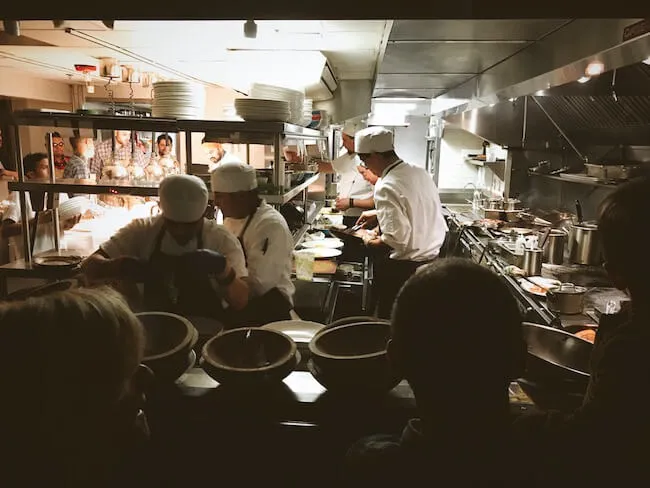
Photo: RoyaltyFreeStuff, CC BY-SA 4.0, via Wikimedia Commons
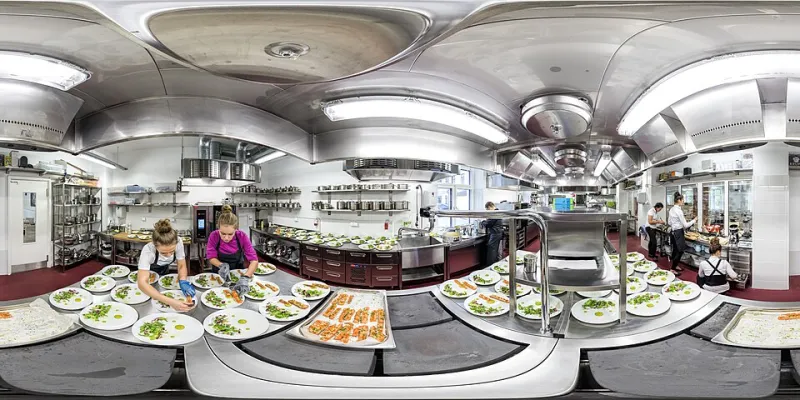
Let's start with a story. A few months back, a line cook at a well-regarded Mission District restaurant — we'll call her Daniela, because she'd like to keep her job — described what happens every time a DoorDash ticket prints versus a dine-in ticket prints. Same dish name. Different protein cut. Different sauce ratio. Shorter cook time. "The bowl looks the same in the photo," she told us. "But it's not the same bowl."
This is not a scandal. It is, by now, simply the economics of surviving as a restaurant in San Francisco in the 2020s. But it deserves to be said out loud, clearly, without the usual PR softening: a significant number of SF restaurants are cooking two different versions of their food — one for the people sitting at their tables, one for the algorithm-routed strangers ordering from a couch in the Sunset.
And most diners have absolutely no idea.
How the Math Works (And Why It's Brutal)
Here's the part that should make you furious on behalf of every chef in this city. When you order through Uber Eats, DoorDash, or Grubhub, the platform takes somewhere between 15 and 30 percent off the top. On a $22 entrée, that's up to $6.60 gone before the restaurant sees a dime. Add packaging, the fact that food has to survive a 25-minute car ride in a bag, and the reality that a one-star review from a soggy order tanks your ranking — and suddenly, the calculus of what goes into that container changes completely.
Chefs aren't cutting corners because they're lazy. They're cutting corners because the math demands it. Braised short rib that takes six hours and costs $14 in food cost alone doesn't make sense when the platform eats your margin and the driver parks three blocks away for eight minutes. So you swap it for a faster braise, a cheaper cut, a sauce that travels better. You engineer the dish for the container, not the plate.
"The dine-in menu is what I actually want to cook," one chef at a Hayes Valley spot told us, unprompted, after we'd ordered the same dish twice — once at the counter, once through the app. "The delivery menu is what I have to cook to keep the lights on."
The Experiment
We spent six weeks ordering the same dishes from fifteen San Francisco restaurants — once in person, once through a delivery platform. The results were not subtle.
At a popular Richmond District ramen shop, the in-house bowl arrived with a cloudy, deeply porky tonkotsu broth that had clearly been ladled from a pot that had been going since Tuesday. The delivery version had a noticeably thinner consistency — still good, but a different animal entirely. The noodles, which in-house came out with that perfect al dente resistance, arrived via app as a soft, slightly gummy mass that had clearly been sitting in hot liquid since the order was placed.
A Tenderloin Thai spot served us a dine-in pad see ew with wok hei — that elusive smokiness that only comes from a screaming-hot carbon steel wok and a cook who knows what they're doing. The delivery version? Cooked to order, sure, but in a smaller pan at lower heat to avoid the fire alarm that, we were told, had become a recurring issue since the exhaust system needed work. Same dish. Ghost of a dish.
To be fair, a few spots held the line. A Bernal Heights Filipino counter refused to simplify anything for delivery. "If it doesn't travel, we don't put it on the app," the owner told us flatly. Their delivery menu is about a third the size of what they serve in house. Their ratings on DoorDash are middling. Their in-person line on weekends is out the door.
The Chefs Who Said No
There's a quiet resistance forming among SF's more ornery restaurant operators, and it's worth celebrating.
Some have pulled off the platforms entirely, absorbing the lost revenue in exchange for full creative control. Others have gone the route of a curated, honest delivery menu — fewer items, no compromises, clear communication that certain dishes simply aren't available for delivery because they'd be an insult to send out in a bag. A handful have built their own ordering systems specifically to avoid the platform tax, reinvesting that margin back into ingredient quality.
What these spots share isn't ideology. It's stubbornness, which in the restaurant business is practically a survival trait. They've decided that sending out a diminished version of their food is a worse long-term bet than sending out less food, better.
"My reputation is the dish," said one Dogpatch chef who runs a tight, ingredient-obsessed dinner spot. "If someone orders my duck confit through an app and it shows up wrong, they don't blame DoorDash. They blame me. So I just don't put the duck confit on DoorDash."
Radical concept.
What You Can Actually Do About This
Look, we're not here to tell you to never order delivery. San Francisco winters are cold, parking is a nightmare, and sometimes you've had a week that ends with you horizontal on a couch in the Inner Sunset with nothing left to give. Delivery is fine. It's useful. It's not going away.
But go in with eyes open. If a restaurant has a dish that you've heard is transcendent, that's been described to you in reverent tones by someone who ate it in the actual room — go eat it in the actual room. Delivery is for the practical meal. The pilgrimage is for the real one.
And when you do show up in person, tip like you mean it. That cook sweating over a six-hour braise for your table isn't doing it for the app rating.
The Bigger Picture
The delivery economy didn't create the pressures squeezing SF's restaurants — rent, labor costs, and a city that seems pathologically committed to making it hard to run a small business got there first. But the platforms have added a specific new distortion: they've created a financial incentive to cook worse food, at scale, and present it under the same name as the good stuff.
That's a problem worth naming. Not because we're precious about fine dining or romantic about the idea of restaurants as temples. But because San Francisco's food culture — the thing that actually makes this city worth eating in — runs on the accumulated craft of people cooking food they believe in, at counters and tables where you can watch them do it.
The algorithm doesn't care about any of that. The bag doesn't care. The rating system that dings you because a driver took a wrong turn doesn't care.
The chef cares. Go find them where they're actually cooking.