They Left the City and Found Their Cooking Soul: Where SF's Best Chefs Actually Are Now
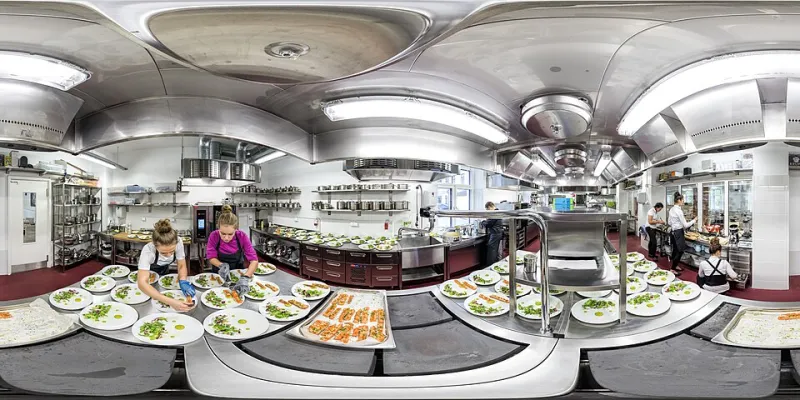
Photo: Lauri Veerde, CC BY-SA 4.0, via Wikimedia Commons
Here's a thing nobody at a fancy Hayes Valley dinner party wants to admit: the best meal you'll eat in the Bay Area this year probably won't happen in San Francisco. It won't be plated under Edison bulbs in a converted warehouse. There won't be a two-month waitlist, a $45 cocktail, or a server who describes the provenance of your butter with the solemnity of a funeral director.
It'll happen in a Richmond District garage that's been quietly converted into a Saturday-only supper club. Or a former auto body shop in West Oakland. Or — and stay with us here — a strip mall in Daly City where a Michelin-pedigreed chef is slinging the most technically precise Filipino food you've ever put in your face, for seventeen dollars a plate, cash only.
The flavor exodus is real, it's been building for years, and if you've been sleeping on it, you've been eating worse for it.
The Math That Broke SF's Kitchen Culture
Talk to any chef who's bolted from San Francisco in the last three years and the story rhymes, even if the details differ. The rent is obscene. The labor market is brutal. The health department is a full-time antagonist. The customers — god love them — have been trained by a decade of hype culture to expect a performance, not a meal.
"I was spending sixty percent of my mental energy on logistics," says one former sous chef from a well-regarded Mission restaurant who asked to remain anonymous because she's still consulting for spots in the city. "Vendor negotiations, lease renewals, Yelp fires, tip pooling disputes. I got into cooking because I wanted to cook. I was doing everything except that."
She now runs a weekend pop-up out of a friend's catering kitchen in Emeryville. Her waitlist — actual waitlist, not a PR stunt — is six weeks long. She works four days a week. She is, by her own account, the happiest she's been since culinary school.
This is not an isolated case. It's a pattern.
The Pop-Up Underground Has Graduated
What started as a pandemic-era survival strategy has matured into something more intentional and, frankly, more interesting. The pop-up format — once dismissed as a stepping stone to a "real" restaurant — has become the destination itself for a growing cohort of serious cooks who've done the math and rejected the traditional model entirely.
The economics are not complicated. No lease means no landlord. No dining room means no front-of-house payroll. No fixed address means no neighborhood association breathing down your neck about your exhaust fan. What's left is the food, the people who genuinely want it, and a cook who actually gives a damn.
In Marin County, a former Nopa line cook hosts monthly dinners out of a rented farmhouse kitchen that seat exactly fourteen people. The menu changes completely every time. There are no dietary accommodation requests accepted — it's a house rule printed right on the reservation confirmation — which sounds insane until you realize it means the chef is cooking exactly the food she wants to cook, and the people showing up are there because they trust her. The dinners sell out in under an hour.
"I made more money last month than I made in six months at my last restaurant job," she told us over the phone, sounding almost embarrassed about it. "And I cooked four days. That's it."
The East Bay Has Been Eating Well for Years (You Just Weren't Paying Attention)
Let's pour one out for every Bay Area food writer who spent the last decade treating Oakland and Berkeley like charming footnotes to the main San Francisco narrative, because those cities have quietly absorbed a generation of displaced SF talent and turned it into something genuinely thrilling.
West Oakland in particular has become a kind of culinary pressure cooker — in the best possible sense. Lower rents, a more forgiving regulatory environment, and a community of eaters who are enthusiastic without being precious have created conditions where chefs can actually experiment without betting their entire life savings on whether the experiment works.
A James Beard-nominated chef who closed his celebrated SF spot in 2022 (the usual story: lease tripled, couldn't make the numbers work) now operates a small production kitchen in West Oakland, selling jarred sauces, ferments, and meal kits through a subscription model. He also does one pop-up dinner a month. He is not struggling. He is thriving.
"The restaurant was the dream," he said when we caught up with him at the Oakland Farmers Market. "But the dream had a $28,000 monthly overhead and I was working eighty hours a week to keep it alive. This is also the dream. It's just a different shape."
Small Towns, Serious Food
Travel further and the story gets wilder. Sebastopol. Petaluma. Point Reyes Station. Healdsburg, if you've got the gas money. The North Bay has been quietly absorbing SF culinary refugees for half a decade, and the results are increasingly hard to ignore.
In Petaluma — which, let's be honest, most SF residents couldn't find on a map without GPS — a husband-and-wife team who spent years cooking at some of the city's most celebrated restaurants opened a forty-seat spot two years ago. No PR firm. No influencer preview dinners. They just opened, cooked their food, and let word spread at human speed.
The food is extraordinary. The kind of extraordinary that makes you a little angry you drove forty-five minutes for it, and then makes you immediately start planning your next visit before you've finished dessert.
"We couldn't have done this in SF," the chef told us between services. "Not this food, at these prices, with this level of sanity. The city would have eaten us alive before we found our footing."
What This Actually Means for SF
Here's the uncomfortable question nobody in the SF food establishment wants to sit with: if your best chefs are leaving, what exactly is left?
What's left, largely, is a two-tier system. At the top, the expense-account temples where a meal costs what a decent used car cost in 2015. At the bottom, the legacy spots — the taquerias, the dim sum halls, the Vietnamese lunch counters — that have survived through sheer community loyalty and the stubbornness of families who refuse to be priced out of their own neighborhoods.
The exciting middle — the ambitious, personal, idiosyncratic cooking that made SF a genuine food city — has largely decamped. And it took the flavor with it.
This isn't a eulogy, exactly. Think of it more as updated directions. The food you're looking for? It moved. It's better now. It just requires you to get in the car.
We'll tell you where to point it.