From the Ashes of a Pandemic: How SF's Immigrant Cooks Are Building a Fiercer, Realer Food City
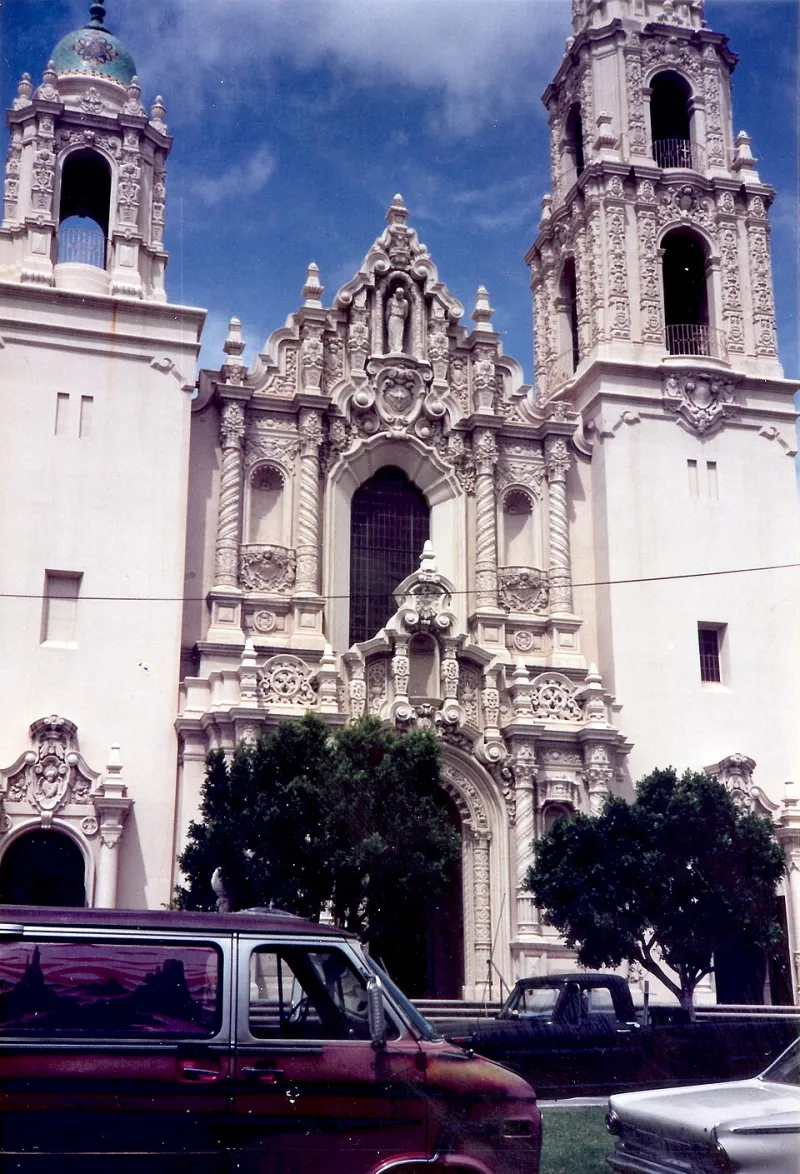
Photo: please credit "Family photos of Infrogmation", CC BY-SA 4.0, via Wikimedia Commons
Let's not romanticize what happened. COVID killed restaurants in San Francisco the way a wildfire kills a forest — fast, indiscriminate, and with absolutely no regard for how long something had been standing. By the end of 2020, the city had lost somewhere north of 50% of its independent restaurants. Lease deals evaporated. Suppliers went dark. Decades of accumulated culinary knowledge — the kind that lives in the hands of a line cook, not in a cookbook — scattered to the wind.
But here's the thing about wildfires: what grows back in the aftermath is often stranger, tougher, and more interesting than what burned.
In the neighborhoods that took the hardest hits — the Mission, the Outer Richmond, the Tenderloin, Chinatown — something is stirring. It doesn't always have a Yelp page. It doesn't always have a sign. But it has flavor, it has intention, and it has the kind of community backbone that a $22 avocado toast pop-up simply cannot manufacture.
The Mission Didn't Die. It Got Smaller and Meaner (in the Best Way)
Walk down 24th Street on a Tuesday evening and the evidence is right there in your face. Not in the form of a glossy new opening with a PR firm behind it, but in the form of a hand-lettered menu taped to a window, a line of regulars who all seem to know each other, and the smell of something extraordinary happening in what used to be a laundromat.
Latinx chefs who spent years working the back-of-house in other people's restaurants — often in the very restaurants that closed during the pandemic — are now running their own operations. Smaller. Leaner. Entirely on their own terms.
Take the wave of Salvadoran and Oaxacan spots that have quietly colonized storefronts that once housed overpriced farm-to-table concepts. These aren't places built for Instagram. They're built for the neighborhood, which is exactly why they're full every night while the restaurant two blocks over — the one with the James Beard-nominated chef and the $18 cocktails — sits at half capacity.
The calculus here isn't complicated. When you're cooking for your community, your community shows up. When you're cooking for a demographic trend, you're at the mercy of whatever the next trend is.
Richmond District: The Quiet Resilience of a Food Neighborhood That Never Needed Your Attention
The Richmond has always been something of an open secret among people who actually know how to eat in this city. Clement Street alone contains more culinary diversity per block than most American cities contain in total. But COVID hit the neighborhood's Chinese, Southeast Asian, and Russian restaurateurs with particular brutality — many of them operating on thin margins, with limited access to the PPP loans and grant programs that kept other businesses afloat.
What's emerged on the other side is a fascinating restructuring. Family-run dim sum spots that once relied on large banquet bookings have retooled around smaller, more frequent service. Cantonese BBQ operations that were hemorrhaging money on full dining room overhead have shifted to hybrid counter-service models that are actually more profitable. A handful of second-generation Chinese American chefs — people who grew up watching their parents grind through sixty-hour weeks in someone else's kitchen — have opened their own spots, threading together the food traditions they inherited with the cooking techniques they picked up along the way.
The result is something that doesn't fit neatly into any category, which is exactly what makes it worth eating.
Less Capital, More Soul: Why the New Math Actually Works
Here's the dirty secret of the pre-COVID SF restaurant scene: a lot of those places were running on fumes and venture money. The mid-2010s restaurant boom was, in retrospect, a bubble — inflated by tech wealth, artificially suppressed commercial rents, and a dining public that had confused novelty with quality.
The immigrant-owned businesses rebuilding right now don't have access to that kind of capital. They're working with personal savings, family loans, and in some cases, community investment pools that function more like mutual aid than traditional financing. And paradoxically, that constraint is producing better restaurants.
When you can't afford to fail, you don't open until you're ready. You don't pad the menu with filler. You don't hire a branding agency to tell you what your restaurant is about. You already know what it's about. You've known your whole life.
This isn't poverty tourism — let's be clear about that. The goal isn't to celebrate the fact that these communities are operating with less support than they deserve. The goal is to acknowledge that the food coming out of these kitchens is extraordinary, and that the adversity has, in some cases, sharpened it.
The Tenderloin's Quietly Radical Food Scene
If the Mission is having a renaissance and the Richmond is having a restructuring, the Tenderloin is doing something harder to name. The neighborhood has always been home to some of the city's most underappreciated food — Vietnamese spots on Larkin, Ethiopian restaurants clustered around Hyde, Burmese joints that have been feeding the neighborhood long before anyone thought to write a trend piece about Burmese food.
Post-pandemic, these places are not just surviving. Some of them are thriving in ways they weren't before, partly because the dining public has gotten more adventurous (out of necessity, partly) and partly because the food press has finally started paying attention to neighborhoods that aren't the Mission or Hayes Valley.
There's also been a meaningful uptick in community-supported restaurant models in the TL — spots where the line between restaurant and community center is deliberately blurred, where a meal might come with a side of mutual aid resources, where the chef is also the neighbor who organized the block cleanup last month.
What This Means for the Rest of Us
San Francisco has spent the better part of a decade congratulating itself on its food scene while systematically defunding the communities that actually built it. High rents pushed out the taquerias and dim sum spots and pho joints to make room for concepts that aged out in eighteen months. The pandemic accelerated that process and then, weirdly, partially reversed it — because when the expensive stuff collapsed, it left space for something more durable to fill in.
The immigrant-owned restaurants rebuilding SF's food backbone right now aren't a trend. They're not a comeback story for you to feel good about. They're just people cooking what they know, for people who need to eat, in a city that has historically taken that for granted.
The least we can do is show up, order more than we planned to, tip generously, and come back next week.
No reservations required. Just hunger, and a little bit of gratitude.