Ghost of a Good Meal: Why SF's Best Restaurants Are Absolutely Unrecognizable at Your Door
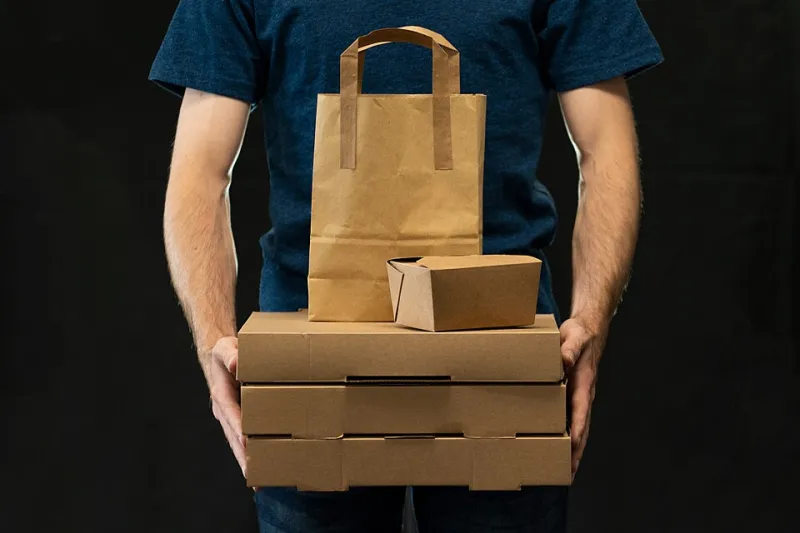
Photo: Meanwell Packaging, CC BY 2.0, via Wikimedia Commons
Let's set the scene. It's a Wednesday. You've had a day that would make a therapist wince. You decide you deserve something good — not sad desk salad good, not cereal-over-the-sink good, but actually good. So you pull up the app, scroll past seventeen mediocre options, and land on that Outer Sunset spot you've been obsessing over since your friend dragged you there last month. The one with the karaage that made you briefly reconsider your entire relationship with fried chicken.
Forty-five minutes later, a paper bag arrives sweating through itself. You open the container. The karaage is steaming in its own condensation like a sad sauna. The skin that was once shatteringly crisp is now the texture of a wet paper towel. The ponzu dipping sauce has tipped slightly, pooling under everything. You eat it anyway because you're starving and you already paid. And somewhere across the city, the chef who fried that chicken is having a small, quiet crisis they don't even know about yet.
This is the delivery betrayal. And it's happening to some of SF's best food every single night.
The Physics of a Ruined Meal
Here's the thing nobody puts in the DoorDash marketing copy: food is a live performance. Temperature, texture, and timing aren't just nice-to-haves — they're load-bearing elements of the experience. A perfect bowl of ramen is a system in dynamic equilibrium. The broth has to be at a specific temperature to keep the noodles from going limp. The noodles have to be added at the last possible second. The soft-boiled egg, the nori, the fat pooling on the surface — it's all timed. Put a lid on it, stick it in an insulated bag, and send it across town for thirty-five minutes? You've just cooked the noodles twice.
Chef Marcus Tran, who runs a small Vietnamese spot in the Richmond that shall remain nameless because he still uses delivery apps and doesn't need the drama, puts it plainly: "There are dishes I make that I genuinely wish people would stop ordering for delivery. I can't say that publicly. But I'm watching my food arrive wrong at people's apartments every night and there's nothing I can do about it."
Food scientists will tell you that most cooked proteins continue cooking in their own residual heat for up to fifteen minutes after leaving the pan. Your burger isn't medium-rare anymore. It just isn't. The steam trapped inside a sealed container turns crispy things into chewy things and chewy things into mushy things. Emulsified sauces — your hollandaise, your beurre blanc, your carefully constructed aioli — break under temperature stress. It's not the restaurant's fault. It's thermodynamics. And thermodynamics doesn't care about your Yelp review.
What the Drivers Know That You Don't
Spend five minutes talking to delivery workers in this city and you'll learn things that will permanently alter your ordering habits. Drivers carrying multiple orders — which is almost always the case during peak hours — are making triage decisions about sequencing that have nothing to do with your food's structural integrity. Your poke bowl might be riding around in a bag next to someone's hot soup for twenty minutes before it gets dropped. The insulated bags help, but they also trap steam, which is its own particular enemy of crispy textures.
One driver we spoke to, a guy named Darius who's been doing this in SF for four years and bikes the Mission to Castro corridor with the kind of calm efficiency that should qualify as a superpower, said it simply: "People order things that don't travel. Fries. Anything fried, really. Soufflés, if you can believe it. I've delivered soufflés. They were flat by the time I got there and the person at the door still tipped me, which I appreciated, but like — why?"
Why, indeed.
The Brutal Ranking: Worth the App Tax, or Worth the Trip?
Let's get specific, because vague warnings aren't useful. Here's our honest assessment of the SF food categories that survive delivery and the ones that don't.
Survives Delivery Like a Champion:
- Birria tacos (the braising liquid actually keeps everything moist in transit)
- Most Indian curries and dal (designed to hold, built to travel, better the next day anyway)
- Pizza, with caveats (thick crust holds better; thin crust is a gamble; sourdough-adjacent SF pizza is genuinely fine cold)
- Korean BBQ banchan (the side dishes are the whole point and they travel great)
- Burritos from the Mission (structurally engineered for portability; this is their natural state)
Dies in Transit, Every Time:
- Anything tempura or karaage (see above; you know this already; stop doing it)
- Ramen and pho (the noodle-to-broth ratio becomes a tragedy within fifteen minutes)
- Eggs Benedict or anything with hollandaise (a broken sauce is a broken heart)
- Steamed dumplings (they stick, they tear, they lose their structural integrity; order the pot stickers instead)
- Any composed salad from an upscale spot (dressed salads are a fifteen-minute window; delivery takes thirty)
SF-Specific Casualties:
- The beautiful, delicate Cantonese seafood from the Sunset and Richmond neighborhoods — the silky steamed fish, the wok-tossed clams — genuinely needs to be eaten at the table, ten seconds after it leaves the wok. Ordering this for delivery is like buying a concert ticket and listening to it through a wall.
- The city's celebrated sourdough sandwiches fare better than you'd think, but the ones with hot fillings turn the bread gummy. Cold sandwich? Fine. Hot? Gamble.
The Restaurants That Actually Get It Right
A small number of SF spots have quietly redesigned their delivery menus to acknowledge reality. They're not serving you the same menu online that they serve in person — they're serving you a version of it engineered for a thirty-minute journey. Smarter packaging. Sauces on the side. Proteins slightly undercooked so they finish at the right temperature by arrival. Bread shipped separately.
This is honest. This is good faith. This is the restaurant equivalent of saying: we know what we're doing, we know what you're getting, and we've adjusted accordingly.
The ones that just dump their full dine-in menu onto every platform and let the physics sort it out? That's where the betrayal lives.
The Actual Solution (You're Not Going to Love It)
Go. Just go. SF is a city built for eating out — neighborhoods walkable enough to reach a good meal without a car, weather mild enough that you can sit outside eleven months of the year if you're wearing the right jacket, a dining culture dense enough that there's almost certainly something worth eating within a fifteen-minute radius of wherever you're sitting right now.
The delivery economy has convinced us that convenience is the highest value. But the best meal you'll eat this month isn't going to arrive in a paper bag. It's going to be slightly too loud, slightly too cramped, served by someone who's been on their feet for six hours and still manages to be charming about it, and it's going to taste exactly like it was supposed to taste.
Save the apps for the dishes that travel. Save the trips for the ones that don't.
Your karaage will thank you.