Stars, Schmars: How Michelin Turned SF's Best Food City Into a Playground for Expense Accounts
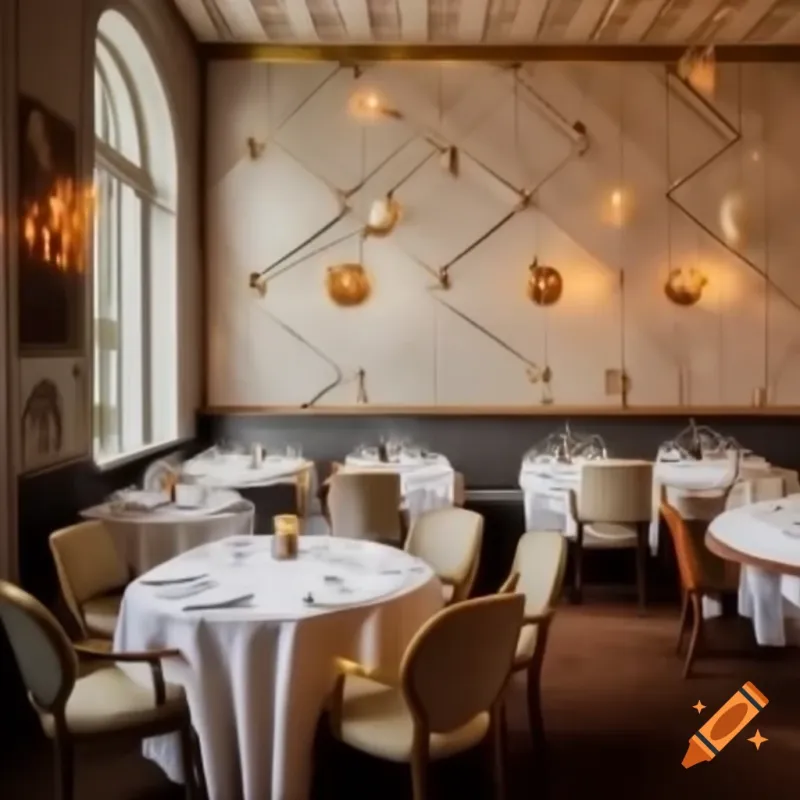
Photo: fancy restaurant empty dining room michelin star white tablecloth pretentious, via pics.craiyon.com
Let's get something straight before we begin: a Michelin star is not a guarantee of a good meal. It is, increasingly, a guarantee of a very long evening, a tasting menu you didn't entirely consent to, and a bill that makes you briefly reconsider your life choices in the Uber home.
San Francisco currently boasts more Michelin-starred restaurants per capita than almost any American city outside New York. That sounds like bragging rights. In practice, it means we've watched neighborhood gems get replaced by omakase counters charging $400 a seat, while the inspectors drive right past the Tenderloin spot doing the most technically impressive pho in the Western hemisphere.
Welcome to the Michelin Trap.
How a French Tire Company Became the Arbiter of Your Dinner
For the uninitiated: Michelin — yes, the tire people — started rating restaurants in 1900 as a way to get French motorists to drive more and wear out their tires faster. The guide eventually became the most influential restaurant rating system on earth, which is either a testament to brilliant marketing or a damning indictment of how easily the food world gets played.
The inspectors are anonymous. The criteria are famously opaque. And the results, particularly in a city as culinarily chaotic and genuinely weird as San Francisco, often feel like they were generated by someone who once read about San Francisco in a magazine.
Starred restaurants in SF tend to share certain traits: prix fixe menus, hushed dining rooms, staff who describe each dish with the solemnity of a eulogy, and a demographic that skews heavily toward people visiting from out of town with a reservation made six weeks in advance. Which is fine, if that's your thing. But let's not pretend it represents what eating in this city actually looks like.
The Price of Prestige
Here's where it gets genuinely ugly. The Michelin effect doesn't just inflate the prices of starred restaurants — it distorts the entire ecosystem around them. Landlords in neighborhoods that develop a critical mass of acclaimed spots raise rents across the board. Chefs who trained under starred kitchens open their own places and price accordingly, because that's what the market now expects. The restaurants that made a neighborhood interesting in the first place get squeezed out.
The Mission has lived this story. So has Hayes Valley. SoMa is living it right now.
Meanwhile, a two-star dinner in San Francisco will run you $300-500 per person before you touch the wine list. The wine list, incidentally, will feature bottles with markups so aggressive they should come with a trigger warning.
For that same money, you could eat extraordinarily well in this city for two weeks — if you knew where to look. Spoiler: none of those places have stars.
The Spots That Actually Deserve the Hype
To be fair — and fairness is something we practice here even when it's inconvenient — not every starred restaurant in SF is a cynical money extraction machine. A handful genuinely justify the spectacle.
The places worth your hard-earned cash tend to be the ones where the chef is still actually cooking, where the menu reflects something personal rather than something designed to impress inspectors, and where the room doesn't feel like a stage set for a prestige TV drama about rich people eating.
Think of it this way: if the restaurant's Instagram account looks like it was art-directed by a luxury hotel chain, proceed with extreme caution. If the chef's face shows up in the photos looking genuinely sweaty and excited about a specific ingredient, you might be onto something real.
The Unrecognized Greatness Problem
This is the part that actually keeps food people up at night. For every restaurant in San Francisco collecting stars and accolades, there are a dozen places doing food that is more innovative, more delicious, and more reflective of what this city actually is — and they will never see an inspector.
The Michelin guide has a well-documented bias toward European fine dining traditions. Restaurants that don't fit neatly into that framework — and San Francisco is full of them, from the Cantonese banquet halls in the Richmond to the Salvadoran spots in the Excelsior to the pan-Asian late-night operations in the Sunset — get evaluated on terms that were never designed with them in mind.
A grandmother making hand-pulled noodles in a Clement Street storefront at 6 AM, feeding the same neighborhood for thirty years, is doing something that no tasting menu can replicate. But she's not getting a Bib Gourmand, because Michelin inspectors are not eating on Clement Street at 6 AM. They're eating at the places that know how to court them.
What to Actually Do With This Information
If you have $400 burning a hole in your pocket and a special occasion to mark, go ahead and book the tasting menu. A few of them will genuinely blow your mind, and there's something to be said for a meal that takes three hours and makes you feel like you've witnessed something. We're not monsters.
But if you're trying to understand what San Francisco food actually is — the living, breathing, occasionally chaotic thing that makes this city one of the most interesting places to eat in the world — the Michelin guide is a terrible map. It shows you the monuments. It doesn't show you the city.
The real guide is the one you build yourself: by following the cooks who left starred kitchens to do something weirder and cheaper, by eating at the spots that have lines of actual locals rather than tourists clutching printouts, by asking your cab driver and your barber and the woman at the farmers market where they eat on a Tuesday night.
That's the city. The stars are just the gift shop.
The Bottom Line
Michelin has done real damage to San Francisco's dining culture by creating a prestige economy that rewards performance over substance and systematically ignores the communities that built the city's food reputation in the first place. The guide isn't evil — it's just a tool designed for a different purpose being applied to a place it doesn't fully understand.
Eat the starred restaurants if you want. Some of them are extraordinary. But don't let a French tire company tell you what's worth your time in a city this full of people cooking their hearts out for twelve bucks a bowl.
Those people are the whole point. The stars are just a distraction.